2026-08-17 · Robert Hayes
Fixing Flashing Issues Around Dallas Chimneys
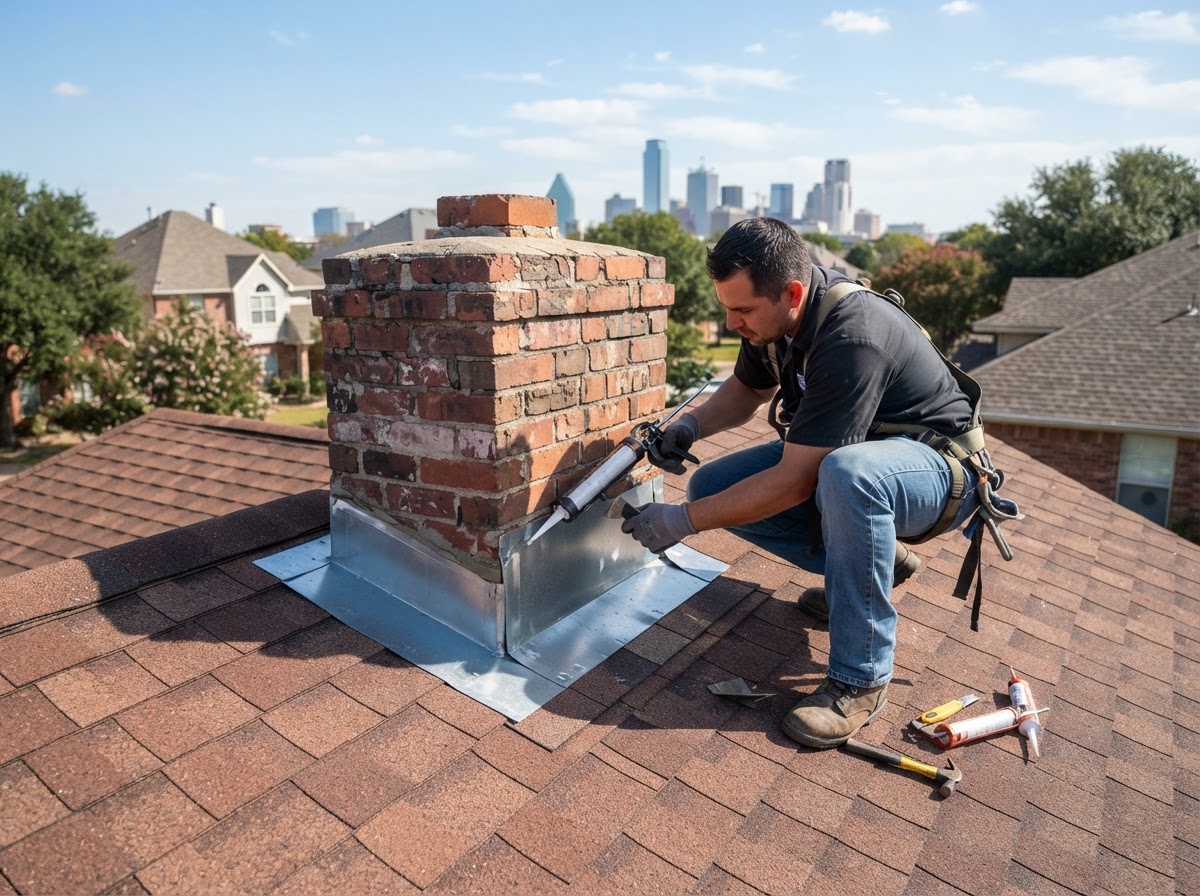
Fixing flashing issues around Dallas chimneys means cutting out the old step flashing and counter flashing, then installing new 26-gauge galvanized metal sealed at the brick joints. Most jobs run 1-2 days and cost $500-$1,200 per chimney depending on height and access. Skip the big-box sealant because it cracks after one summer of 100-degree days followed by heavy rain.
Why Does Flashing Fail Around Chimneys in Dallas?
Dallas sits in a humid subtropical climate with hot summers and mild winters. The constant expansion and contraction from 100-degree days to cooler nights loosens mortar and bends metal. Add wind-driven rain from spring storms and you get leaks at the chimney base within 8-12 years on many homes in Oak Lawn and East Dallas. Older brick chimneys common in those neighborhoods also settle unevenly, cracking the original flashing seams. We see the same pattern on roofs near Klyde Warren Park where tree cover keeps moisture trapped longer.
How Do I Spot Flashing Problems Early?
Look for dark streaks on the ceiling inside near the fireplace or water stains on attic rafters right next to the chimney. Outside, check for gaps where the metal pulls away from the brick or rusted nails holding the step flashing. In neighborhoods like North Dallas and Lake Highlands, check after every big storm because hail and high winds tear counter flashing loose fast. If you see daylight through the joint or feel soft decking when you walk the roof, the leak has already started rotting the sheathing.
What Does Chimney Flashing Repair Cost in Dallas?
Expect $500-$900 for a standard single-story asphalt shingle roof when we replace both step and counter flashing. Two-story homes or those with tile push it to $900-$1,500 because of extra scaffolding time. Add $200-$400 if we have to sister new decking or replace rotted felt. These numbers cover labor and materials for homes in Uptown Dallas and Deep Ellum where access is tight. We tie the new flashing into the existing shingles so water sheds correctly instead of pooling behind the chimney.
When Should I DIY and When Do I Call a Pro?
You can safely inspect from the ground with binoculars and note any obvious gaps or rust. You can also clear debris from the cricket if it is low and flat. Stop there. Anything above one story, anything involving cutting into the roof membrane, or any work near electrical lines needs a pro because one slip means a fall or a bigger leak. We handle the permit side when required and document everything for insurance claims on storm damage. For real chimney flashing repair that lasts, see our chimney flashing repair page.
Proper attic ventilation helps reduce the temperature swings that loosen flashing in the first place. Read more on that in our guide to extending roof life in Dallas with proper ventilation. Call the crew at 5124 Sharp St, open Mon-Sat 7am-7pm with 24/7 emergency service.